
Mail
yangtao@jx-aiyi.com
ATR FT-IR Spectroscopy: Illuminating Blood Evidence and Advancing Forensic Science
Author:JIANGXI AIYI HI-TECH CO., LTD.
Click:
Time:2025-01-10 17:11:00
In recent years, FT-IR spectroscopy has become a popular technique in forensic analysis, especially as the demand for evidence and spectral data analysis in criminal investigations continues to increase. With the continuous development of portable instruments, FT-IR spectrometers have gradually been miniaturized while maintaining the necessary functions of larger devices. This technological advancement allows researchers to perform FT-IR spectroscopy directly at the crime scene, reducing the contamination and changes that may be caused by sample transportation.
A recent review article explores how an important application of FT-IR spectroscopy, attenuated total reflectance Fourier transform infrared spectroscopy (ATR FT-IR), can play a role in the analysis of blood evidence. This technology provides a precise and non-destructive examination method, injecting new impetus into forensic science. The on-site analysis capability of FT-IR spectroscopy is crucial to preserving the integrity of evidence, especially in time-sensitive criminal investigations.
Bloodstain analysis is one of the important application areas of FT-IR spectroscopy, which is often the key to solving crimes. ATR FT-IR spectroscopy can distinguish blood from other substances, analyze its biochemical composition, and estimate the deposition time of bloodstains. Based on the research results since 2008, this review discusses in detail the progress, challenges and future directions of FT-IR spectroscopy in blood analysis.
As a technology that uses the principle of infrared light absorption, FT-IR spectroscopy can identify key molecular components in blood, such as proteins, lipids and carbohydrates. This high sensitivity makes FT-IR spectroscopy a reliable tool for distinguishing blood from other biological or non-biological substances. In addition, FT-IR spectroscopy can also identify the species origin of blood, providing key evidence for cases involving multiple parties or non-human sources.
The combination of ATR FT-IR spectroscopy and chemometrics is another highlight in this review. Through the multivariate statistical methods of chemometrics, FT-IR spectroscopy analysis can achieve highly accurate qualitative and quantitative evaluation of blood evidence. This data-driven approach further enhances the value of FT-IR spectroscopy in forensic science.
Nevertheless, the application of FT-IR spectroscopy still faces some obstacles. The review points out that sample preparation problems, such as interference of substrate materials on spectral readings, and the lack of standardized protocols limit the widespread application of FT-IR spectroscopy in the field of forensics. These challenges need to be overcome by optimizing sample processing methods and establishing standardized databases.
In addition, the review also recommends combining ATR FT-IR spectroscopy with other vibrational spectroscopy techniques, such as Raman spectroscopy and near-infrared spectroscopy. The integration of FT-IR spectroscopy with these techniques can break through the current limitations and further expand its forensic capabilities.
Recent advances in FT-IR spectroscopy have made it a portable and cost-effective tool for non-destructive evidence analysis. In particular, ATR FT-IR spectroscopy has shown great potential in blood evidence analysis and will play an important role in forensic science and crime prevention.
Prev : Detecting Mineral Content in Camel Milk Using FT-IR and Machine LearningNext : Revolutionizing Pesticide Analysis in Foods of Animal Origin with Advanced GC Techniques
你的喜欢,就是我坚持写下去的能量器
YouArticle
已有0人推荐
Recommended article
—


Recommended Products
—

AY-601Q Fully Automatic Transformer Oil Analysis Gas Chromatograph
The AY-601Q Fully Automatic Transformer Oil Analysis Gas Chromatograph is a next-generation dissolved gas analysis (DGA) system designed specifically for electric power applications. Integrating mechanical oscillation degassing, gas chromatography detection, automation control, and intelligent analysis, it completes the analysis of hydrogen, methane, ethylene, ethane, acetylene, carbon monoxide, carbon dioxide, and other gas components within 7 minutes per sample injection,with a 15-position aut
Interview

MS10-H500-Pro LCD Digital Magnetic Hotplate Stirrer
The MS10-H500-Pro is a high-performance LCD digital magnetic hotplate stirrer featuring a 10-inch glass ceramic work plate that handles up to 30L of liquid with powerful magnetic stirring. With digital speed control from 100-1500rpm, heating up to 500°C, PT1000 external temperature sensor support (±0.2°C accuracy), a “HOT” safety warning, and real-time SD card data recording, it delivers precise, safe, and traceable heating and stirring for modern laboratories.
Interview

Frozen Animal Semen Filling & Sealing machine
This automatic frozen semen straw filling and sealing machine integrates automatic counting, quantitative filling, and ultrasonic welding into one streamlined workflow. With a filling efficiency of approximately 2,000 straws per hour, touch-screen control, and real-time process monitoring, it minimizes manual intervention and supports standardized batch production—making it the ideal solution for animal breeding stations, breeding laboratories, and frozen semen production lines.
Interview

AY-GCX-624 Medium polarity GC column
The 6% Cyanopropylphenyl-94% Dimethylpolysiloxane GC Column is a high-performance medium-polarity chromatographic column designed for gas chromatography (GC) applications. It offers exceptional versatility, robustness, and sensitivity, making it ideal for a wide range of analytical tasks across industries such as pharmaceuticals, environmental monitoring, petrochemicals, and cosmetics.
Interview

EX-1800 High-Performance HPLC System
This high-performance liquid chromatograph (HPLC) is a high-precision, high-stability analytical device designed for high-demand liquid phase separation analysis in laboratories. It is equipped with a 70MPa ultra-high pressure infusion pump, providing a flow rate range of 0.001-10ml/min, ensuring precise flow control to meet diverse experimental needs. The built-in PDA diode array detector provides a wide wavelength range of 200-800nm, with excellent wavelength accuracy and low noise performance
Interview

Protein Purification System
This instrument can carry out a variety of commonly used purification techniques, such as affinity chromatography, ion exchange chromatography, hydrophobic chromatography, and gel filtration. Therefore, this system can support the purification of various proteins and nucleic acids, including recombinant proteins, antibodies, vaccines or natural proteins.
Interview

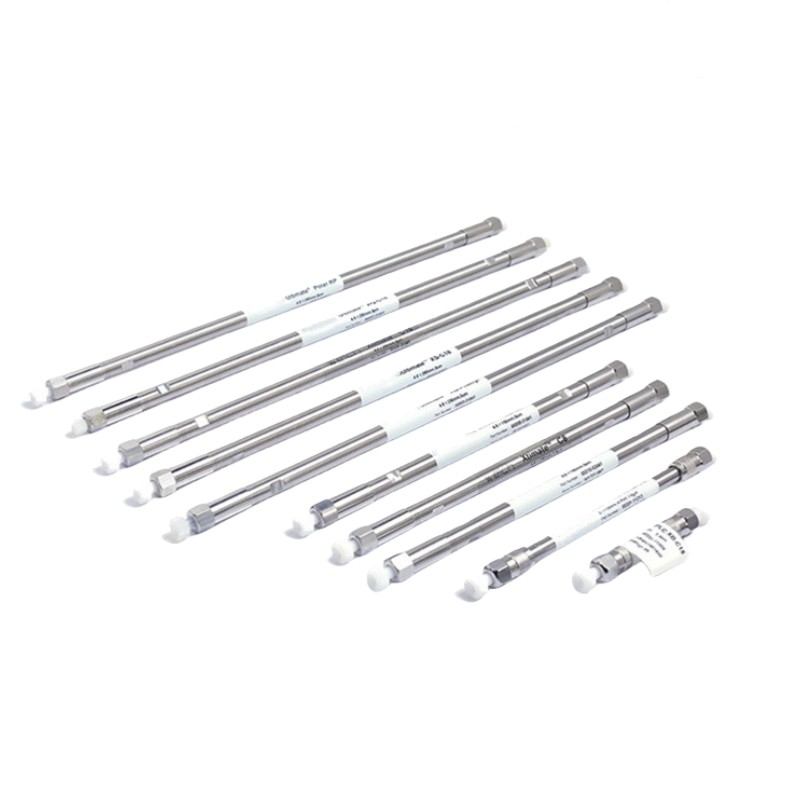
HPLC Guard Column Cartridge & Holder
The Guard Column Cartridge & Holder system provides a cost-effective solution for protecting analytical HPLC columns from particulate and strongly retained chemical contaminants. With a reusable stainless-steel holder and replaceable cartridges packed with stationary phases matched to the analytical column, the system maintains separation efficiency, peak shape, and reproducibility,significantly extending column lifetime and reducing operating costs.
Interview

T-5 Double Beam UV-Vis Spectrophotometer
The T-5 Double Beam UV-Vis Spectrophotometer sets a new benchmark for analytical precision. Built on a C-T optical structure with an imported photomultiplier tube detector and dual imported light sources, it delivers exceptional wavelength accuracy (±0.3nm), ultra-low stray light (≤0.03%τ), and outstanding stability (0.0003A/h). Controlled via a 7-inch color touch screen, the T-5 is the ideal choice for quality control, research, and testing laboratories across pharmaceutical, environmental, and
Interview

RE200-Pro Rotary Evaporator
The RE200-Pro is a large-capacity rotary evaporator engineered for high-efficiency solvent evaporation and recovery. With a 20L sample flask, heating range up to 180°C, double-layer high-efficiency condenser, and fully automated motor lifting, it delivers reliable performance for pharmaceutical, chemical, and industrial distillation processes,backed by comprehensive safety protections and an intelligent LCD control system.
Interview
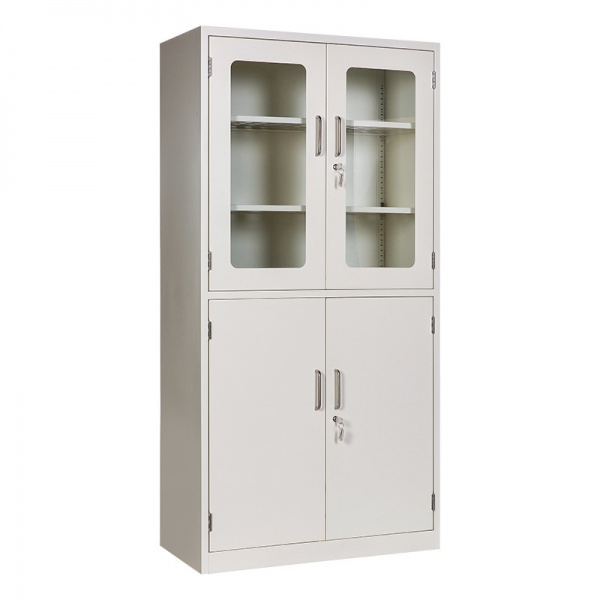
All-Steel Laboratory Medicine Cabinet
Interview

Desktop Fume Hood
The Desktop Fume Hood is a compact and versatile safety solution designed to maximize laboratory efficiency. Engineered for installation directly on central workbenches, this unit features a unique dual-sided access design, allowing two users to operate simultaneously from opposite sides. With a total height of 1500mm, it fits seamlessly into standard laboratory settings without obstructing overhead lighting or room circulation. This model is particularly ideal for educational institutions, r
Interview

Energy-Efficient Ducted Fume Hood
Laboratory Fume Hood (models V9-FG-1200 / 1500 / 1800). Dimensions 1200/1500/1800 × 900 × 2400 mm. Face velocity 0.3 m/s, 0 ppm tracer gas leakage, ultra-low 17.5 Pa static pressure. Energy-efficient design requires no extra make-up air. Narrow-edge construction maximizes workspace and viewing area. Fully certified to ANSI/ASHRAE 110-2016 and EN 14175-3-2019. Ideal for chemical, pharmaceutical, university and research laboratories.
Interview
ADDRESS
No. 609, High Tech Houju Street, Qingshanhu District, Nanchang City, Jiangxi Province




David Mabel James Elly

点击右上角
分享给朋友吧
CONTACT
Ph: +86 19318553935
+86 18079100967
+86 19318537228
+86 18170839926
Mail: james@jx-aiyi.com
mabel@jx-aiyi.com
anli@jx-aiyi.com
david@jx-aiyi.com
NEWSLETTER
