
Mail
yangtao@jx-aiyi.com
GC Column Conditioning: A Small Step That Makes a Big Difference
Author:JIANGXI AIYI HI-TECH CO., LTD.
Click:
Time:2026-04-29 19:42:54
What is GC Column Conditioning?
To use a practical analogy, conditioning a new GC column is much like “seasoning a new pan” before cooking.
During the manufacturing, cutting, and packaging processes, a new column may retain trace amounts of residual solvents, uncrosslinked stationary phase fragments, or sealing compounds. If you begin running analytical samples immediately, these residues will volatilize in the oven, leading to several disruptive issues:
- Ghost Peaks: Unidentified peaks appearing in your chromatogram that do not belong to your sample.
- Unstable Baseline: A drifting or noisy baseline that obscures low-level analytes.
- Reduced Sensitivity: Background noise masking trace-level detection limits.
Conditioning gently heats the column under a carrier gas flow to remove these volatile residues, bringing the stationary phase into a stable, ready-to-work state.
Before You Begin: Essential Pre-Conditioning Checks
From years of field experience, we’ve learned that skipping preliminary checks can render the conditioning process useless. Before applying heat, verify the following:
- Correct Installation Direction: Ensure the column is installed with the correct end at the inlet and the correct end at the detector (always refer to the column box markings).
- Ferrule Integrity & Tightness: Ensure all fittings are properly tightened to eliminate leaks. Even a micro-leak will pull in ambient air, severely destabilizing the baseline during heating.
- Carrier Gas Flow: Set the appropriate carrier gas flow rate (typically 1–2 mL/min for capillary columns) and allow it to stabilize for a few minutes before introducing heat.
Standard Conditioning Workflow
Once the physical setup is verified, follow this standard temperature ramping protocol:
1. Handle with Care During Installation
Avoid excessive bending, kinking, or stressing the fused silica column during installation. While durable, sharp bends can cause internal breaks that ruin the column.
2. Initiate Carrier Gas Flow
Turn on the carrier gas and allow it to flow through the column for several minutes at room temperature to purge the ambient air from the system.
3. Gradual Temperature Ramp
Never blast the oven directly to high temperatures. Use a gradual ramping program:
- Start at a low initial temperature (e.g., 40°C–50°C).
- Ramp slowly at a rate of 5°C to 10°C per minute.
- Hold the temperature near the column’s maximum isothermal operating limit (typically 20°C below the absolute temperature limit) for 1 to 2 hours.
During this hold time, you should observe the baseline on your integrator. It may spike initially but should gradually flatten and stabilize as residues are burned off.
Pro Tips for Successful Conditioning
- Keep the Detector Off: There is no need to turn on the flame ionization detector (FID) or mass spectrometer (MS) during the initial conditioning phase. This prevents detector contamination from the burning-off residues.
- Avoid Thermal Shock: Heating the oven too quickly subjects the stationary phase to unnecessary thermal stress, which can lead to premature phase degradation or column bleed.
- Monitor the Baseline: If the baseline remains continuously unstable after 2 hours, stop the process. This usually indicates a leak at the fittings, insufficient gas purity, or a contaminated gas line—not a column issue.
Conclusion
GC column conditioning is not an optional step; it is a fundamental laboratory best practice. By taking 1 to 2 hours to properly “season” your new column, you protect your investment, safeguard your sensitive detectors, and guarantee the integrity of your analytical data from the very first injection.
Recommended article
—


Recommended Products
—

AY-601Q Fully Automatic Transformer Oil Analysis Gas Chromatograph
The AY-601Q Fully Automatic Transformer Oil Analysis Gas Chromatograph is a next-generation dissolved gas analysis (DGA) system designed specifically for electric power applications. Integrating mechanical oscillation degassing, gas chromatography detection, automation control, and intelligent analysis, it completes the analysis of hydrogen, methane, ethylene, ethane, acetylene, carbon monoxide, carbon dioxide, and other gas components within 7 minutes per sample injection,with a 15-position aut
Interview

MS10-H500-Pro LCD Digital Magnetic Hotplate Stirrer
The MS10-H500-Pro is a high-performance LCD digital magnetic hotplate stirrer featuring a 10-inch glass ceramic work plate that handles up to 30L of liquid with powerful magnetic stirring. With digital speed control from 100-1500rpm, heating up to 500°C, PT1000 external temperature sensor support (±0.2°C accuracy), a “HOT” safety warning, and real-time SD card data recording, it delivers precise, safe, and traceable heating and stirring for modern laboratories.
Interview

Frozen Animal Semen Filling & Sealing machine
This automatic frozen semen straw filling and sealing machine integrates automatic counting, quantitative filling, and ultrasonic welding into one streamlined workflow. With a filling efficiency of approximately 2,000 straws per hour, touch-screen control, and real-time process monitoring, it minimizes manual intervention and supports standardized batch production—making it the ideal solution for animal breeding stations, breeding laboratories, and frozen semen production lines.
Interview

AY-GCX-624 Medium polarity GC column
The 6% Cyanopropylphenyl-94% Dimethylpolysiloxane GC Column is a high-performance medium-polarity chromatographic column designed for gas chromatography (GC) applications. It offers exceptional versatility, robustness, and sensitivity, making it ideal for a wide range of analytical tasks across industries such as pharmaceuticals, environmental monitoring, petrochemicals, and cosmetics.
Interview

EX-1800 High-Performance HPLC System
This high-performance liquid chromatograph (HPLC) is a high-precision, high-stability analytical device designed for high-demand liquid phase separation analysis in laboratories. It is equipped with a 70MPa ultra-high pressure infusion pump, providing a flow rate range of 0.001-10ml/min, ensuring precise flow control to meet diverse experimental needs. The built-in PDA diode array detector provides a wide wavelength range of 200-800nm, with excellent wavelength accuracy and low noise performance
Interview

Protein Purification System
This instrument can carry out a variety of commonly used purification techniques, such as affinity chromatography, ion exchange chromatography, hydrophobic chromatography, and gel filtration. Therefore, this system can support the purification of various proteins and nucleic acids, including recombinant proteins, antibodies, vaccines or natural proteins.
Interview

HPLC Guard Column Cartridge & Holder
The Guard Column Cartridge & Holder system provides a cost-effective solution for protecting analytical HPLC columns from particulate and strongly retained chemical contaminants. With a reusable stainless-steel holder and replaceable cartridges packed with stationary phases matched to the analytical column, the system maintains separation efficiency, peak shape, and reproducibility,significantly extending column lifetime and reducing operating costs.
Interview

T-5 Double Beam UV-Vis Spectrophotometer
The T-5 Double Beam UV-Vis Spectrophotometer sets a new benchmark for analytical precision. Built on a C-T optical structure with an imported photomultiplier tube detector and dual imported light sources, it delivers exceptional wavelength accuracy (±0.3nm), ultra-low stray light (≤0.03%τ), and outstanding stability (0.0003A/h). Controlled via a 7-inch color touch screen, the T-5 is the ideal choice for quality control, research, and testing laboratories across pharmaceutical, environmental, and
Interview

RE200-Pro Rotary Evaporator
The RE200-Pro is a large-capacity rotary evaporator engineered for high-efficiency solvent evaporation and recovery. With a 20L sample flask, heating range up to 180°C, double-layer high-efficiency condenser, and fully automated motor lifting, it delivers reliable performance for pharmaceutical, chemical, and industrial distillation processes,backed by comprehensive safety protections and an intelligent LCD control system.
Interview
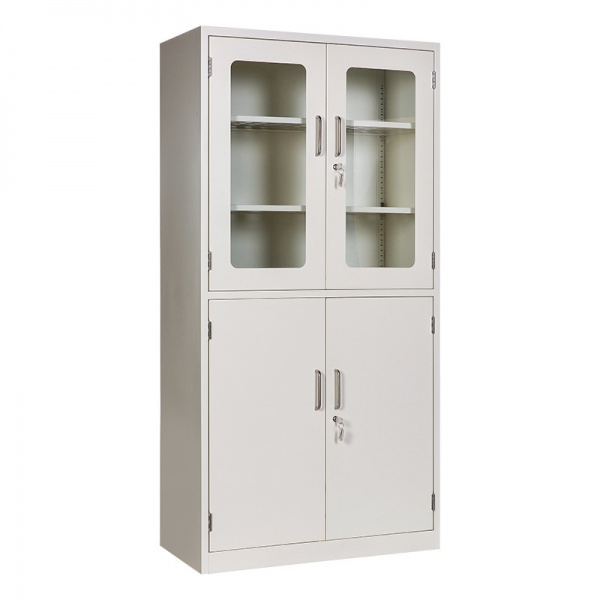
All-Steel Laboratory Medicine Cabinet
Interview

Desktop Fume Hood
The Desktop Fume Hood is a compact and versatile safety solution designed to maximize laboratory efficiency. Engineered for installation directly on central workbenches, this unit features a unique dual-sided access design, allowing two users to operate simultaneously from opposite sides. With a total height of 1500mm, it fits seamlessly into standard laboratory settings without obstructing overhead lighting or room circulation. This model is particularly ideal for educational institutions, r
Interview

Energy-Efficient Ducted Fume Hood
Laboratory Fume Hood (models V9-FG-1200 / 1500 / 1800). Dimensions 1200/1500/1800 × 900 × 2400 mm. Face velocity 0.3 m/s, 0 ppm tracer gas leakage, ultra-low 17.5 Pa static pressure. Energy-efficient design requires no extra make-up air. Narrow-edge construction maximizes workspace and viewing area. Fully certified to ANSI/ASHRAE 110-2016 and EN 14175-3-2019. Ideal for chemical, pharmaceutical, university and research laboratories.
Interview
ADDRESS
No. 609, High Tech Houju Street, Qingshanhu District, Nanchang City, Jiangxi Province




David Mabel James Elly

点击右上角
分享给朋友吧
CONTACT
Ph: +86 19318553935
+86 18079100967
+86 19318537228
+86 18170839926
Mail: james@jx-aiyi.com
mabel@jx-aiyi.com
anli@jx-aiyi.com
david@jx-aiyi.com
NEWSLETTER
